
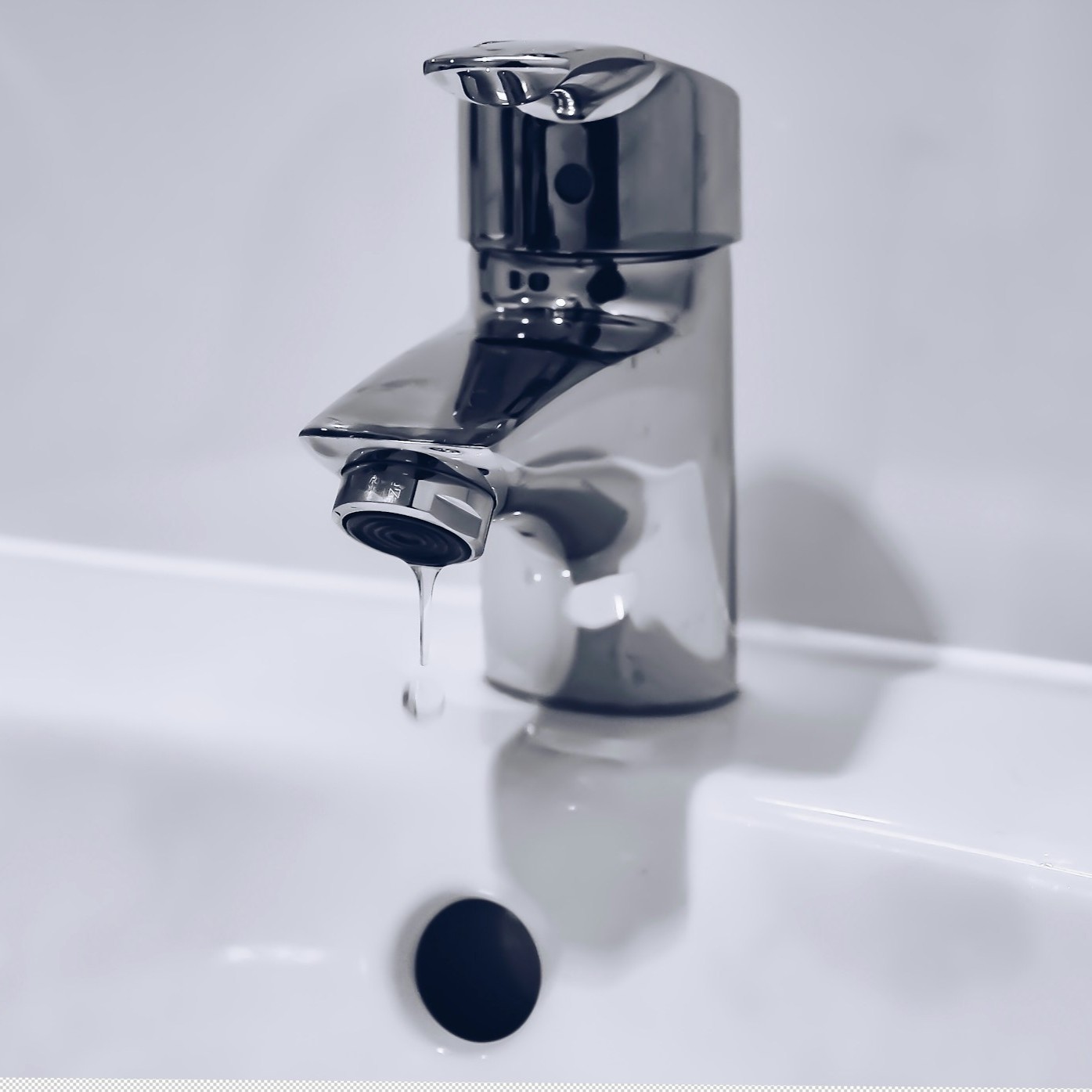
Scale crusting up your shower head. White spots on your fixtures. Skin that feels tight after a shower. A water heater working harder than it should.
Those are hard water problems. Here in Gilbert and across the East Valley, that usually means calcium and magnesium, and a water softener is built to handle them.
Reverse osmosis fixes a different problem. Lead, nitrates, PFAS and other contaminants aren’t hardness issues, and a softener won’t remove them.
A softener treats hardness throughout your home. Reverse osmosis treats drinking and cooking water at one tap. If you’ve got both issues, the two systems can work together.
Key Takeaways
- USGS classifies water above 121 mg/L, about 7 grains per gallon, as hard. Above 180 mg/L is very hard.
- Softeners use ion exchange to remove hardness minerals throughout the house. They won’t touch chlorine, nitrates, PFAS or bacteria.
- Reverse osmosis pushes water through a membrane, usually at one tap. Look for NSF/ANSI 58 certification and check which specific contaminants a unit is certified to reduce.
- A softener ahead of an RO system protects the membrane. On very hard water, an RO unit without softened water upstream usually needs its membrane replaced sooner.
What’s Your Real Problem: Hard Water or Contaminated Water?
These aren’t the same thing, and picking the wrong system means spending the money without fixing anything.
Hardness comes from dissolved calcium and magnesium, usually picked up as groundwater moves through limestone. It’s generally classed as hard above 121 mg/L (about 7 grains per gallon), and very hard above 180 mg/L. It’s not a health risk, just a household nuisance and a running cost.
Contaminants are a different category: lead from old solder and fittings, nitrates from fertilizer runoff, plus chlorine byproducts, PFAS and bacteria. None of that causes scale or the white spots on your glassware, and a softener won’t touch any of it.
Some homes have both, especially private wells, where water can be naturally hard and still carry contaminants that need separate treatment.
How Hard Water Damages Your Home
Heat encourages minerals to form scale, which is why water heaters take the brunt of it. Testing for the Water Quality Research Foundation found gas storage water heaters running on hard water lost up to 24% of their efficiency over a simulated 15-year lifespan.
Scale also narrows pipes over time, clogs faucet aerators and shower heads, and builds up in washing machine and dishwasher valves. It even fights your detergent: WQRF laundry testing found softened water hit the same stain-removal results using up to half as much detergent, while hard water leaves clothes feeling stiffer from mineral residue in the fibers.
How a Water Softener Works
A water softener doesn’t filter your water, it swaps one set of minerals for another. Inside the tank, resin beads attract calcium and magnesium and release sodium (or potassium) in their place. That’s ion exchange. Nothing gets physically filtered out, so chlorine, nitrates and PFAS pass straight through untouched.
Once the resin fills up with hardness minerals, the softener flushes them out with a salt-brine rinse and resets. A typical cycle uses 25-65 gallons of water and 6-15 pounds of salt, depending on your system and water hardness.
Because a softener sits where the main line enters your home, it treats everything: showers, faucets, the dishwasher, the washer, the water heater. That whole-house reach is the point of installing one.
How Reverse Osmosis Works
RO systems push water through an extremely fine membrane instead of swapping out minerals. Water molecules pass through; dissolved solids, metals and larger molecules mostly can’t, and get flushed to the drain along with some of the incoming water.
Before reaching the membrane, water usually passes through sediment and carbon pre-filters, the carbon stage removes chlorine, which would otherwise damage the membrane. Most residential RO systems are point-of-use: installed under the kitchen sink, treating what you drink and cook with rather than your whole water supply.
A properly certified system can reduce lead, arsenic, nitrates, fluoride, copper, chromium and dissolved salts, and some newer units are also tested for PFAS. Check the actual certification for the system you’re buying rather than trusting the claims printed on the box.
Which Is Better for a Gilbert Home?
Whichever matches your actual problem. Scale, spotting and mineral buildup point to a softener. Drinking-water taste, odor or contaminant concerns point to RO. Sometimes the answer is both.
Don’t guess: Gilbert, like every community water system, publishes an annual water quality report each year showing what’s in the water leaving the treatment plant, though it can’t tell you what your own plumbing adds. If lead is a concern, or you’re on a private well, get a tap sample tested by a lab certified by the Arizona Department of Health Services, at minimum for lead, hardness, nitrate and total dissolved solids (add bacteria and arsenic for wells). If all you need is a hardness number to size a softener, a hardware-store test strip is enough.
If you’re not sure what your results mean, that’s where we come in. At Evolution Plumbing, we’ll talk through what you’re seeing and whether a softener, an RO system, or both actually make sense, without selling you more than the problem calls for.
Can you use both together?
Yes, and the normal setup is a softener on the main line first, then RO under the kitchen sink downstream. Removing calcium and magnesium before the water reaches the membrane cuts down on scale, helps the RO system keep its flow rate, and can extend the membrane’s life.
Private wells are the clearest case for running both, since a well can be hard and contaminated at the same time. Test the water before buying either system: the results tell you whether you need a softener, an RO unit, or something else like UV treatment or a sediment pre-filter.
Cost and Maintenance
- What it treats: A water softener treats your whole house. Reverse osmosis treats water at one tap.
- How it works: A softener uses ion exchange with resin beads. RO uses filtration through a membrane.
- Upfront cost: Softeners cost more: a bigger unit and more plumbing work to tie into the main line. RO costs less: a smaller unit installed at one fixture.
- Ongoing cost: Softeners need salt for regeneration. RO needs filter changes, plus a membrane every 2-5 years.
- What wears out: A softener’s resin beads, over years. An RO system’s membrane and filters.
Softeners cost more to buy and install since they’re whole-house systems, but need less frequent attention day to day. RO systems cost less upfront and to install since they only treat one tap, but the filters and membrane need changing on a regular schedule. Exact pricing depends on your home, your water and the system you choose, so we’ll always give you a fixed quote before any work starts rather than a ballpark. Neither system is fully hands-off.
The Trade-Offs
Reverse osmosis sends some water to the drain as part of the filtering process. Older systems ran at roughly 3-4 gallons rejected per gallon filtered; modern high-efficiency systems can hit close to 1:1. It also removes beneficial minerals along with contaminants, since the membrane can’t tell them apart, though the WHO has found no evidence that drinking demineralized water is inherently harmful, since most dietary minerals come from food rather than water. If you prefer mineralized water, remineralizing filters exist to add calcium and magnesium back in. RO also produces water more slowly than a regular tap, usually into a small storage tank.
Water softeners add a small amount of sodium to your water as part of the exchange process, roughly 7.5-8 mg per liter for each grain per gallon of hardness removed. People on sodium-restricted diets should factor that in and can ask their doctor, or use potassium chloride instead of salt. Every regeneration cycle also sends salty wastewater to the sewer, which is why some municipalities restrict self-regenerating softeners. Arizona doesn’t currently, but it’s worth checking with your water provider before installing one.
The Short Version
A whole-house softener tackles the calcium and magnesium behind scale, spotting and mineral buildup. Reverse osmosis reduces specific contaminants in the water you drink and cook with. If you’ve got both problems, a softener on the main line with RO downstream at the kitchen sink handles both without overcomplicating things.
Test your water first, then choose the system that solves the actual problem.
If you’re in Gilbert, Chandler, Mesa or elsewhere in the East Valley and want help sorting through the options, get in touch. We’ll help you make sense of your water and give you a straightforward answer before any work starts.
