
Drain cleaner isn’t automatically bad for your pipes. The wrong product, repeated use, or leaving it in too long can absolutely cause damage.
The bigger issue is whether the cleaner can deal with the clog you’ve got. Hair, soap, and some grease may break down. Roots, solid objects, heavy mineral buildup, and deeper blockages won’t. If the chemical can’t solve the problem, it just sits in the line longer.
That’s where pipe material, age, and condition start to matter.
Key Takeaways
- Chemical drain cleaners work on some simple organic clogs. They don’t fix every kind of blockage.
- Repeated use is harder on older, corroded, or already compromised plumbing.
- PVC and ABS handle normal drain temperatures fine, but some chemical reactions generate enough heat to become a problem when cleaner sits in the trap or line.
- Enzyme and biological cleaners are gentler, though they work slowly and make more sense for maintenance than a drain that’s completely blocked.
- If you’ve already poured chemical drain cleaner into a clogged line, tell your plumber before they start working on it.
How Chemical Drain Cleaners Work
Most chemical drain cleaners fall into a few basic groups. Caustic cleaners use chemicals such as sodium hydroxide or potassium hydroxide to break down grease and organic material. Oxidizing cleaners use chemicals such as bleach or peroxide, while acidic cleaners use stronger acids to attack things like hair and organic buildup.
Then there are enzyme and biological cleaners, which work much more slowly and don’t rely on the same harsh chemical reaction.
You don’t need to memorize the chemistry. You need to know what the product can break down and what it can’t.
Which Clogs Can Drain Cleaner Actually Clear?
Chemical drain cleaner works best when the blockage is something the product can dissolve. Hair, soap buildup, food residue, and some grease are the usual targets, though not every bottle handles all of them equally well.
A cleaner won’t do much against a toy, another solid object, tree roots, or a wipe that’s wedged farther down the line. Heavy mineral scale is another one, and Gilbert’s hard water means scale builds up inside pipes over time. If you’re dealing with any of these, leaving the cleaner in longer isn’t going to turn it into the right tool for the job. It only keeps the chemical in contact with your plumbing longer.
Does Gel Drain Cleaner Work Better Than Liquid Drain Cleaner?
Liquid, gel, foam, and crystal cleaners are different delivery formats, not completely different kinds of drain cleaner. A thin liquid moves through the drain faster, while a gel clings longer and can stay in contact with the clog.
That longer contact isn’t automatically better. It also means the product stays against the pipe longer. The chemistry, the kind of clog you’ve got, and how long the product sits there matter more than whether it came out of the bottle as a liquid or gel.
Can Drain Cleaner Damage Your Pipes?
Yes. The risk depends on what the pipe’s made of, its condition, how often you use chemical cleaner, and whether the product flushes through or sits in one place.
One dose used exactly as directed is very different from pouring chemical cleaner down the same problem drain every month. Problems are more likely when the pipe’s already corroded, scaled up, damaged, or repeatedly exposed to a cleaner that isn’t solving the underlying blockage.
PVC, ABS and Plastic Pipes
PVC and ABS don’t corrode the way metal does, but that doesn’t make them indestructible. Some drain-cleaning chemicals generate a lot of heat while they react. If the product sits in a trap or against one section of pipe too long, that heat and chemical exposure can soften or deform plastic.
The risk goes up with repeated use and with products left in longer than the label says. More time doesn’t mean more cleaning. Once you’ve gone past the manufacturer’s directions, you’re just giving the chemical more time against the pipe.
Cast Iron and Older Drain Lines
Older cast iron needs more respect. By the time we’re dealing with an old cast-iron drain line, there’s often already rust, scale, thinning, or weak spots inside the pipe. Repeated chemical exposure can accelerate corrosion right where the pipe’s already weakest.
Older homes can also have a mix of drain materials and fittings depending on when the plumbing was installed or repaired. The exact age matters less than the condition. If the line’s already thin, rusty, or compromised, harsh chemical drain cleaner isn’t doing it any favors.
Why the Same Clog Keeps Coming Back
A chemical cleaner may dissolve enough material to get the water moving again without dealing with everything that’s built up inside the line. Grease, sludge, hair, scale, and other material can remain farther down the pipe and give the next blockage somewhere to start.
If you’re reaching for drain cleaner every few weeks or every couple of months, that’s the bigger warning sign. The problem isn’t that you haven’t found a strong enough bottle. Something in that drain keeps causing the same blockage, and at that point it makes more sense to find out what it is.
Safer Alternatives to Harsh Chemical Drain Cleaners
If you want something gentler than a harsh chemical cleaner, you’ve got options. The trick is matching the method to the problem instead of treating every slow drain the same way.
Enzyme and Biological Drain Cleaners
Enzyme and biological cleaners break down organic buildup without the aggressive acidic or caustic reaction. They’re much gentler on plumbing, but the trade-off is speed.
These products make more sense for maintenance and slower organic buildup than a sink that’s already full of standing water. If the drain’s completely blocked, waiting overnight for an enzyme cleaner isn’t getting you where you need to go.
And don’t assume every bottle with “green” or “eco” on the front is enzyme-based. Read the label and see what you’re actually putting into the drain.
Natural and Homemade Drain-Cleaning Methods
Baking soda and vinegar fizz. That doesn’t make them magic.
The reaction looks impressive and does very little to a real hair clog, hardened grease farther down the line, roots, or a solid object. Hot tap water, not boiling, and a little grease-cutting dish soap can help on a slow kitchen drain where light grease is the problem, while a plunger can move a soft blockage and a drain snake can physically pull out hair and debris farther down the line.
Those are better first steps than dumping stronger chemicals into a drain that’s already struggling, as long as you’re using the right method for the blockage.
How to Use Chemical Drain Cleaner Without Making Things Worse
If you’re going to use chemical drain cleaner, follow the label. Use the amount the manufacturer calls for and give it the stated amount of time to work.
Don’t leave it in longer because the drain’s stubborn, and don’t pour a second dose straight on top of the first because nothing happened. You also shouldn’t mix different drain cleaners together. If the product doesn’t work within the stated time, stop. At that point you need a different way to clear the clog or an actual diagnosis of what’s causing it.
Wear gloves and eye protection, keep the room ventilated, and keep the bottle away from kids and pets, since these products can burn skin and eyes and irritate your lungs. Never use drain cleaner in a toilet or garbage disposal.
What to Do if Drain Cleaner Is Already Sitting in the Pipe
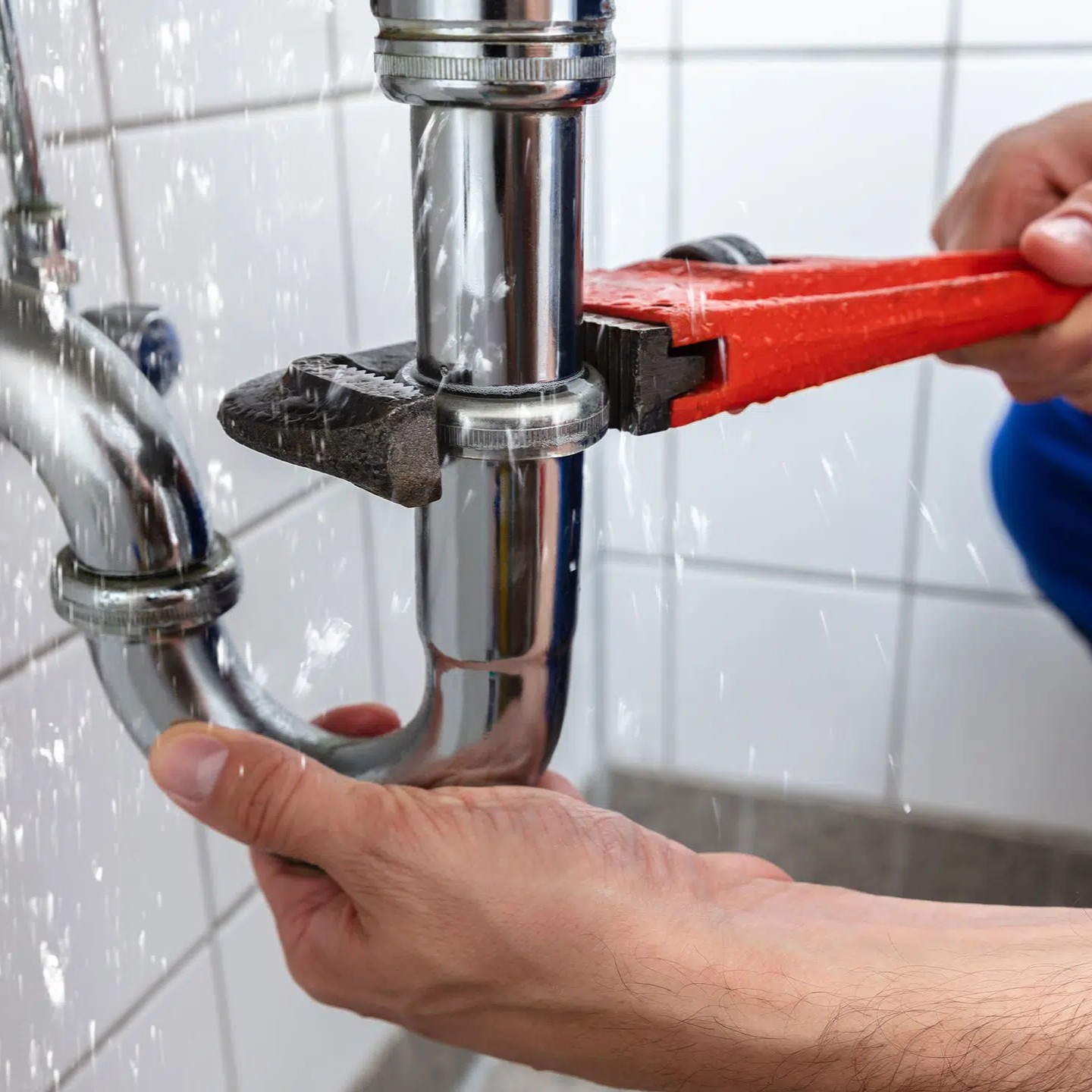
If you’ve already poured chemical cleaner into a blocked drain and it hasn’t gone anywhere, be careful with whatever you try next. Aggressively plunging a basin full of chemical cleaner can splash it back at you, and pulling apart the P-trap means dealing with whatever chemical is sitting inside it.
Don’t put your hands into standing water that may still contain the product. And if you call us after using drain cleaner, tell us what you used. We need to know what’s sitting in the line before we open anything up.
Is Drain Cleaner Safe for Septic Systems?
If your home’s on septic, chemical drain cleaner deserves extra thought. A septic system depends on biological activity inside the tank, so making strong chemical drain cleaner a regular habit isn’t doing that system any favors.
If you’re using any drain treatment on septic, make sure the product’s intended for septic systems and follow the label. Even then, a “septic-safe” bottle doesn’t fix a full tank, a blocked line, or a drain-field problem.
If drains throughout the house are slowing down rather than one isolated fixture, the problem’s bigger than one sink or shower.
When Drain Cleaner Isn’t Enough
A clog that keeps coming back isn’t asking for a stronger bottle. It’s telling you there’s still something in the line.
Sometimes a snake is enough to clear it. Other lines have grease, scale, roots, or years of buildup that call for hydro jetting. And sometimes a camera inspection finds a break, root intrusion, or another problem that cleaning alone isn’t going to fix.
That’s where a proper drain cleaning visit comes in, because figuring out what you’re actually dealing with matters more than throwing another product down the drain.
If you’ve got a drain that keeps slowing down or backing up in Gilbert, Chandler, Mesa, or anywhere around the East Valley, give Evolution Plumbing a call. If you’ve already poured chemical cleaner down there, tell us when you call so we know what we’re walking into.
We’ll figure out what’s causing the blockage and tell you what it needs before we start.
