
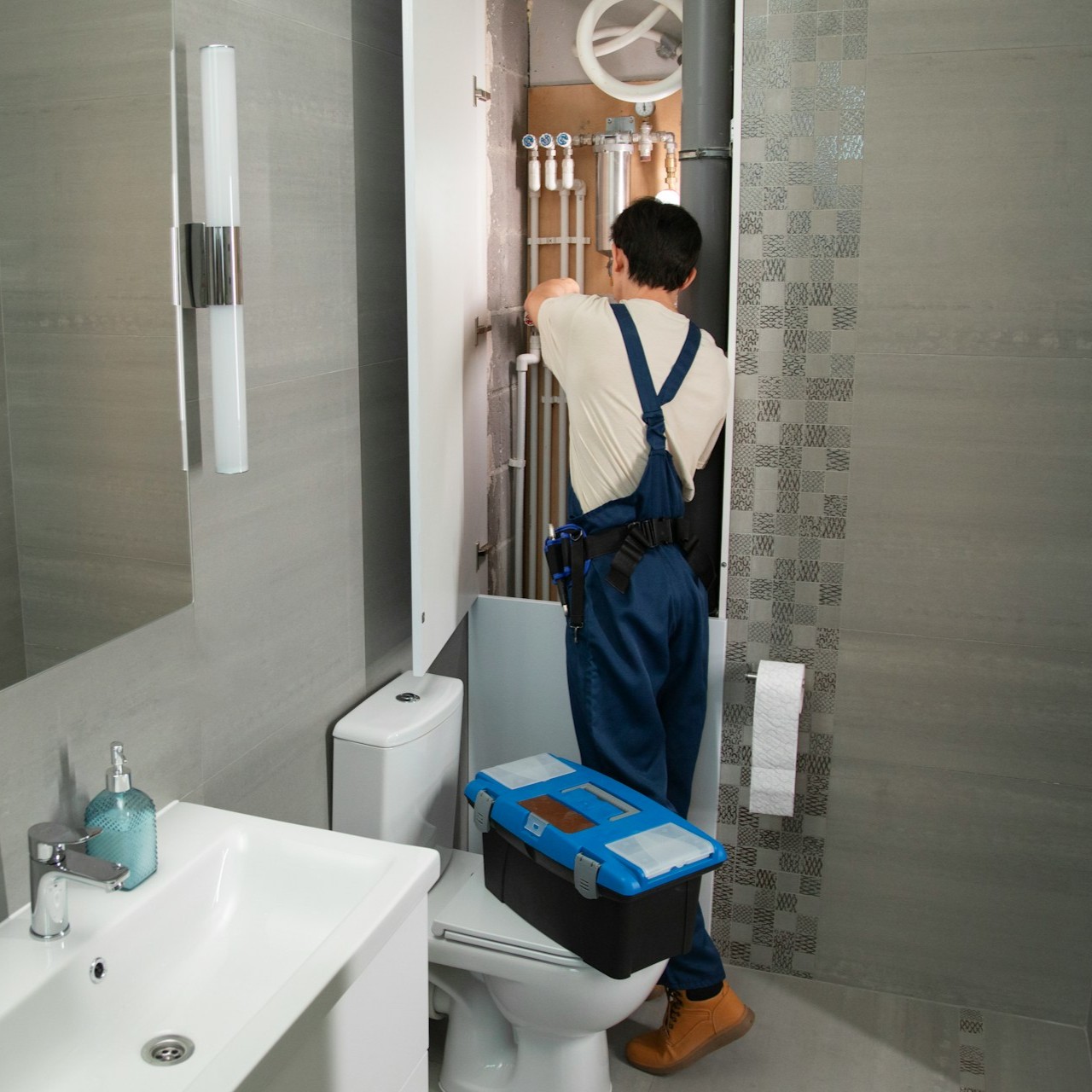
No hot water in a Gilbert, Chandler, Mesa, or East Valley home usually comes down to a short list: the water heater lost power or gas, the pilot went out, an electric element failed, a control or safety reset tripped, or the heater isn’t keeping up anymore.
Start with the easy stuff. Electric water heater? Check the breaker. Gas? Look at the control and pilot status. Then figure out whether you’ve lost hot water everywhere or only at one fixture.
If you smell gas, leave the house and call your gas utility or 911 from outside. Don’t flip switches, don’t relight anything, don’t keep troubleshooting.
If the obvious checks don’t bring the hot water back, that’s when we figure out whether the problem’s electrical, gas-related, a flow issue, or an aging water heater that’s finally had enough.
Key Takeaways
- Check the breaker first on an electric water heater. Turn it fully off, then back on once.
- On a gas water heater, check whether the pilot or burner is operating normally and follow the relighting instructions printed on the unit if needed.
- If the breaker trips again, stop resetting it. There’s a fault somewhere.
- If cold water works normally but hot water doesn’t, the problem is usually at the heater or in the hot-water piping nearby.
- Arizona hard water matters. Scale and sediment reduce flow, hurt recovery, and clog fixtures faster than people expect.
- If you smell gas or the tank itself is leaking, stop troubleshooting and call for help.
First Steps: What to Check Right Now
Before you start taking anything apart, check what you can see without tools.
On an electric unit, find the breaker labeled for the water heater. A tripped breaker may sit halfway between on and off, or it may look fully off depending on the panel. Push it all the way off, then firmly back on.
If it trips again right away, leave it off. That’s not a breaker that needs one more try. Something in the heater, wiring, or circuit needs checking.
On a gas unit, look at the gas control and pilot status. Some heaters have a viewing window where you can see the pilot flame. Others have electronic controls with a status light. If the pilot’s out, follow the relighting instructions printed on the heater itself. Those instructions matter, because the sequence changes by manufacturer and model.
Then check the rest of the house. No hot water anywhere? Or is one shower or faucet the problem? That one distinction saves a lot of guessing.
If the Basics All Check Out
Breaker stays on, gas control looks normal, still no hot water? The problem’s inside the heater or right around it.
On gas tanks, we start looking at the pilot assembly, thermocouple or flame sensor, gas control, burner, and venting. On electric tanks, we’re looking at the reset, thermostats, heating elements, and wiring.
If cold water’s flowing normally but hot water is weak everywhere, we check the valves at the heater before assuming the tank has failed.
Why You’ve Lost Hot Water
Most no-hot-water calls around the East Valley come back to the same handful of causes.
Electric water heaters lose heat when the breaker trips, a thermostat or element fails, or the high-limit reset shuts the unit down. Gas water heaters lose heat when the pilot goes out, the flame-sensing components stop doing their job, the gas control has a problem, or the burner won’t stay lit.
And sometimes the heater isn’t broken at all. It’s undersized for the way the house is using hot water now.
Water Heater Too Small for Your Household
If the tank has always run out after several showers, that’s a sizing problem. Different story from a heater that used to keep up just fine and suddenly doesn’t.
If the hot water disappears much faster than it used to, or the tank never fully recovers, we start looking for a failed heating element, heavy sediment, a broken dip tube, or another actual problem. If the pattern’s always been the same, the house is asking more from the tank than it can deliver.
That usually shows up after something changes: more people in the house, another bathroom getting used, a bigger tub, back-to-back showers in the morning. At that point, fixing the heater won’t solve anything. You need to look at sizing a new water heater for how the house actually uses hot water now.
Gas Water Heaters: Pilot Light and Controls
With a gas water heater, most homeowner checks happen around the control and burner area at the bottom of the tank. If your model has a viewing window, check whether the pilot’s lit. No flame means the pilot isn’t lit.
Follow the instructions printed on the heater to relight it. Don’t use a generic relighting sequence off the internet if the label on your unit says something different.
If the pilot lights but won’t stay lit, the thermocouple or flame sensor is one of the first things we check. That isn’t the only possibility. A dirty pilot assembly, gas control problem, blocked vent, or safety cutoff can all cause the same symptom. Replacing parts until something works usually costs more than diagnosing it correctly the first time.
If you smell gas at any point, leave the house and call from outside. Don’t try to relight the heater.
When the Thermocouple Fails
The thermocouple is a safety part that tells an older gas control whether the pilot flame is actually burning. No flame, it shuts the gas off. That’s the safety doing its job. The problem is when it won’t stay lit even after the pilot catches.
On newer units the flame-sensing setup may be different, but the symptom looks similar: pilot lights, then drops out. Either way, gas control and burner work is where DIY troubleshooting stops.
Electric Water Heaters: Power and Reset
If the breaker stays on but you still don’t have hot water, the next step is the manual reset on the heater. Many electric tanks have a red high-limit reset button behind an access panel on the side of the tank. Turn the breaker off before you open that panel.
If the reset has tripped, press it, reinstall the cover, and restore power. If it trips again, stop. Something caused it to trip, and resetting it over and over isn’t fixing that.
Water that’s lukewarm instead of completely cold usually points to one failed heating element. Most standard electric tanks use more than one element, so one can keep working while the other one’s dead. That’s why you end up with some hot water, just nowhere near enough.
When Cold Water Works but Hot Water Doesn’t
If cold water works normally throughout the house, your main water supply is fine. That moves the problem closer to the heater.
Check the cold-water shutoff going into the tank, especially if somebody recently worked on the plumbing. A valve that wasn’t fully reopened will restrict what moves through the heater.
If hot-water pressure is weak everywhere, we work outward from the heater and check the valves, connections, and hot outlet. If it’s only at one faucet or shower, it’s that fixture.
Low Hot-Water Pressure in an East Valley Home
Arizona scale loves faucet aerators and showerheads. If one fixture has weak hot flow but everything else is normal, pull the aerator or showerhead and look for white mineral buildup. Common East Valley problem, and a whole lot cheaper than tearing into the water heater.
If hot flow is weak throughout the house, we’re back at the heater, shutoffs, or hot-water piping. Hard water plays a part there too, especially in older systems that have been scaling up for years.
DIY Repair or Call a Professional
There are a few things we’re comfortable telling homeowners to check themselves: reset the breaker once, check whether the gas control or pilot shows normal operation, follow the relighting instructions printed on the heater if the pilot has gone out, check whether the problem affects the whole house or one fixture, and look for obvious leaks around the tank and connections. That’s about where we’d draw the line.
If the breaker trips again, the pilot won’t stay lit, you smell gas, the tank itself is leaking, or you’re getting into heating elements, thermostats, gas controls, or internal wiring, call somebody. And if the tank’s already old and this isn’t its first problem, it’s worth talking about replacement instead of stacking another repair onto it.
Temporary Solutions While You Wait for Repair
If the heater’s down and you’re waiting on service, boiling water on the stove or in a kettle gets you through dishes and basic cleanup. Spread out anything else that needs hot water and hold off on laundry if you can. That’ll get you through a short wait.
Getting creative with a malfunctioning gas or electric appliance to squeeze out one more shower isn’t worth it.
Ready for Hot Water Again?
No hot water usually starts with a simple question: did the heater lose power or fuel, or did something inside the unit fail?
If the basics don’t solve it, Evolution Plumbing is here to help. Give us a call and we’ll figure out whether it’s the heater, the controls, the wiring, the gas side, a valve, or Arizona scale causing trouble, and we’ll tell you what it needs before we start replacing parts. Straight answer, fair price.
